
Choosing the right hosting plan can directly affect your website’s speed, reliability, security, and growth potential. For most businesses, the decision often comes down to shared hosting vs VPS hosting.
Both options can support a professional website, but they serve different needs. Shared hosting is usually the more affordable and beginner-friendly option, while VPS hosting offers greater performance, flexibility, and room to scale.
This guide explains the difference, the pros and cons of each, and how to decide which one is best for your business.
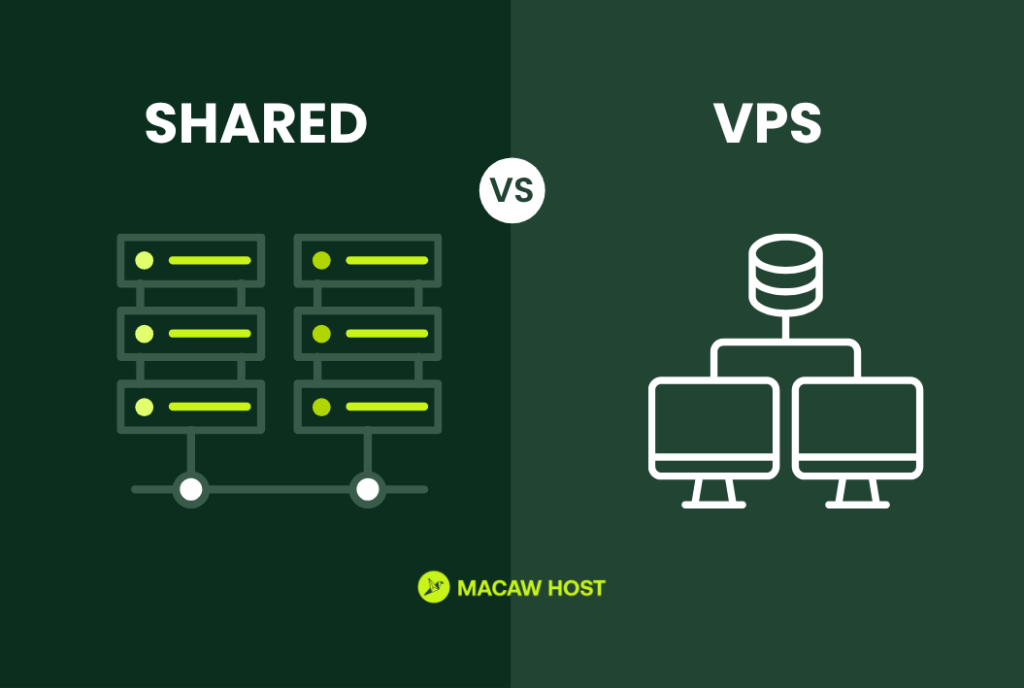
Shared hosting vs VPS hosting: quick comparison
| Feature | Shared Hosting | VPS Hosting |
| Cost | Lower | Higher |
| Performance | Good for small to medium sites | Stronger and more consistent |
| Resources | Shared with other users | Allocated virtual resources |
| Control | Limited | More customization and access |
| Scalability | Basic | Better for growth |
| Security flexibility | Standard | More control and isolation |
| Best for | Small websites, startups, blogs | Growing businesses, e-commerce, and custom apps |
What is shared hosting?
Shared hosting means your website shares one physical server with many other websites. All those sites use the same core server resources, such as CPU, memory, and storage.
Because the cost of the server is spread across multiple users, shared hosting is usually the most affordable hosting option.
- Small business websites
- Portfolio sites
- Personal blogs
- Landing pages
- Starter WordPress websites
Benefits of shared hosting
Lower cost
Shared hosting is ideal for businesses that want to launch online while keeping costs predictable.
Easy to manage
Most shared plans include a user-friendly control panel, one-click app installs, email tools, SSL setup, and backups.
Beginner-friendly
You do not need advanced server knowledge to run a site on shared hosting.
Limitations of shared hosting
Performance can vary
Because resources are shared, traffic spikes or heavy usage from other sites on the same server can affect performance.
Less control
You usually cannot make big server-level changes or install highly customized software.
Limited growth headroom
As your traffic and website complexity increase, shared hosting may eventually become restrictive.
What is VPS hosting?
VPS hosting stands for Virtual Private Server hosting. It uses virtualization technology to partition a single physical server into multiple virtual environments. Each VPS is allocated its own resources, making it more isolated and more powerful than shared hosting.
VPS hosting gives businesses a middle ground between shared hosting and dedicated hosting: more control and better performance without the higher cost of a full dedicated server.
VPS hosting is best for:
- Growing business websites
- E-commerce stores
- Membership sites
- Custom web applications
- Businesses hosting multiple websites
Benefits of VPS hosting
Better performance
Because your resources are allocated to your VPS, performance is more stable, especially during traffic spikes.
Greater control
VPS hosting usually allows more server customization, software flexibility, and configuration options.
Better scalability
As your site grows, VPS hosting is better equipped to handle increased traffic and heavier workloads.
Stronger isolation
Your environment is more separated from other users, which supports better operational control.
Limitations of VPS hosting
Higher cost
VPS hosting costs more than shared hosting, so it may not be necessary for very small websites.
More responsibility
Depending on whether the service is managed or unmanaged, VPS hosting may require more technical involvement.
The main difference between shared hosting and VPS hosting
The biggest difference is how server resources are allocated.
With shared hosting, your site uses a common pool of server resources alongside many other websites. With VPS hosting, your website has its own dedicated virtual share of the server’s resources.
This affects several areas:
- Speed
- Stability
- Scalability
- Flexibility
- Security controls
For business websites, the choice of hosting significantly impacts user experience and overall site performance. A slow or unstable website can diminish visitor trust, reduce conversions, and harm the company’s reputation. When comparing hosting options, understanding the differences between shared hosting vs VPS hosting is crucial, as each has its own advantages and limitations that can influence website speed, security, and scalability.
Shared hosting vs VPS hosting: which is better for your business?
The appropriate choice for your website will vary based on its size, purpose, and growth plans, as each factor influences the optimal configuration, features, and hosting options to ensure scalability and effectiveness.
Choose shared hosting if:
- You are launching a new website
- Your traffic is low to moderate
- Your site is mainly informational
- You want the most affordable option
- You prefer a simple setup with less technical work
Example:
A local accounting firm with a company website, contact form, and blog will usually do well on shared hosting.
Choose VPS hosting if:
- Your website is growing quickly
- You need more consistent performance
- You run an online store
- You host multiple websites
- You need custom software or server settings
- Your site plays an important role in sales or operations
Example:
A growing e-commerce store with many products, regular promotions, and customer accounts will usually benefit more from VPS hosting.
Which is better for e-commerce?
For most e-commerce businesses, VPS hosting with NVMe Storage is the better long-term choice.
Online stores are more demanding than basic websites because they often include:
- Dynamic product pages
- Shopping carts
- Search and filters
- Customer accounts
- Payment and checkout processes
- Order management tools
These features increase server load and require greater performance consistency. A small starter store can begin on shared hosting, but a business-focused e-commerce site will usually outgrow it faster than a simple website.
If your online store is important to revenue, VPS hosting is often the safer option.
Which is better for SEO?
Neither hosting type is automatically better for SEO on its own. What matters is whether your hosting helps your website stay:
- Fast
- Stable
- Secure
- Available
Shared hosting can still support strong SEO if your site is lightweight and performs well. However, if your site becomes slow during high-traffic periods or if performance drops as your content grows, VPS hosting can provide better conditions for both users and search performance.
In practical terms:
- Shared hosting can work well for smaller sites with modest traffic
- VPS hosting is often better for larger, more demanding sites that need stronger speed and uptime consistency
Signs it is time to upgrade from shared hosting to VPS
Many businesses start with shared hosting and later move to VPS. That is often the most cost-effective path.
You may be ready to upgrade if:
1. Your website has become slower
If pages take longer to load as your site grows, your hosting plan may be reaching its limit.
2. Traffic spikes affect stability
If marketing campaigns, seasonal traffic, or promotions cause slowdowns, VPS can offer more reliable performance.
3. You need more control
If you need custom configurations, software installations, or server-level changes, shared hosting may no longer be enough.
4. Your website is business-critical
If your site directly supports leads, bookings, sales, or customer service, better performance and reliability become more important.
5. You are running heavier applications
Plugin-heavy sites, larger databases, and custom platforms often perform better on VPS hosting.
Final verdict: shared hosting or VPS hosting?
There is no one-size-fits-all answer. The best web hosting choice depends on what your business needs now and how much growth you expect.
Shared hosting is best if you want:
- Lower cost
- Easy management
- A good starting point for a smaller website
VPS hosting is best if you want:
- Better performance
- More flexibility
- Greater scalability
- A stronger foundation for growth
For most new or simple business websites, shared hosting is the best starting point. For growing businesses, e-commerce sites, or resource-heavy websites, VPS hosting is usually the better long-term investment.
The smartest choice is the one that matches your current needs while leaving room for your next stage of growth.
FAQ
Usually, yes. VPS hosting tends to offer more stable, consistent performance because resources are allocated rather than broadly shared.
Yes. Shared hosting is often a great fit for small business websites with moderate traffic and basic functionality.
You should consider upgrading when your site becomes slower, traffic increases, or you need more control and scalability.
In many cases, yes. E-commerce websites usually benefit from the stronger performance and flexibility that VPS hosting provides.
Yes. Shared hosting is generally more affordable, which is why it is often the first choice for new websites.
The better option is the one that keeps your site fast, secure, and reliable. For smaller sites, shared hosting may be enough. For larger or growing sites, VPS may support better performance.
Most startups can begin with shared hosting unless they already expect higher traffic, custom application needs, or rapid growth.